


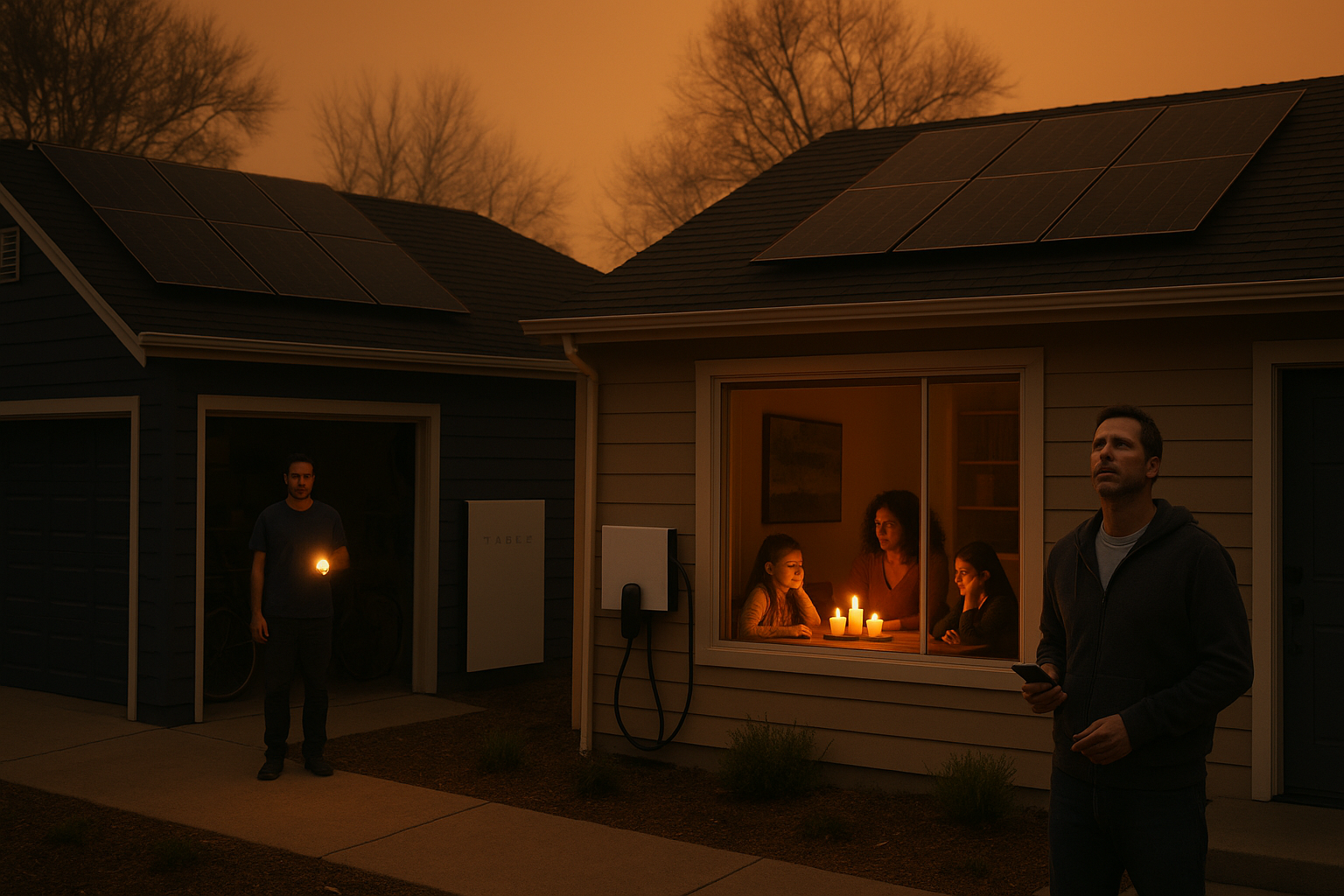
California’s wildfire season is a harsh reminder that power outages have become the new normal. With PG&E’s Public Safety Power Shutoffs (PSPS) cutting electricity to millions, Californians face a crucial choice: invest in a solar battery system or rely on a traditional generator? Let’s dive into the ultimate backup power showdown.
Why Backup Power Is Essential During Wildfire Season
When wildfire season hits, outages can last days — leaving cold nights, spoiled food, and frustrated families disconnected. For those depending on medical devices or working from home, backup power is no longer optional; it’s a necessity. But should you go for the quiet, eco-friendly solar battery or the powerful, fuel-dependent generator?
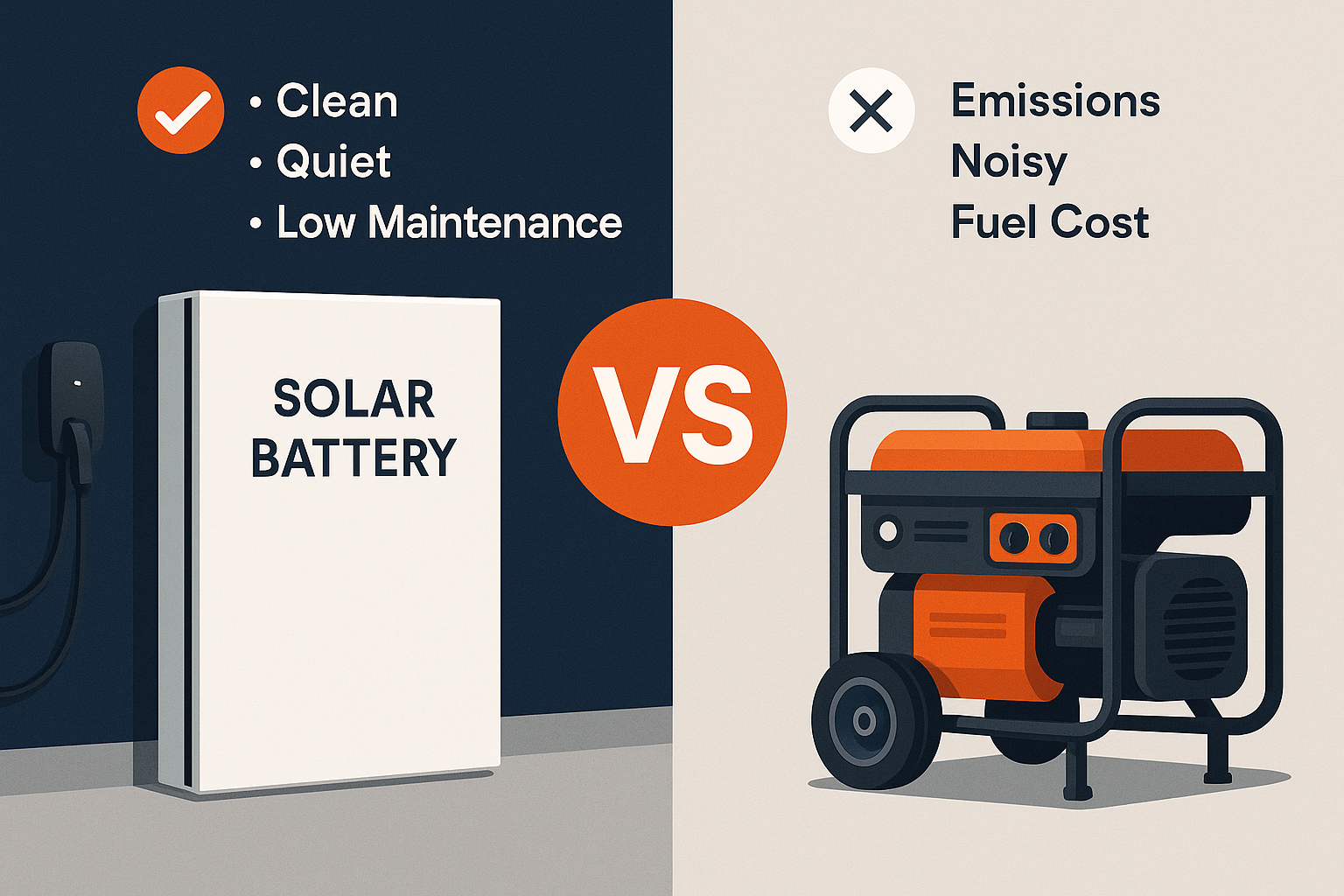
Backup Power Battle: Solar Battery Systems vs Generators
Solar Battery Systems
- Deliver 10-20 kWh of energy, with Tesla Powerwall 2 offering 13.5 kWh to power essentials.
- Support key appliances like refrigerators, lights, and Wi-Fi for 1-3 days, depending on use.
- Automatically switch on quickly during outages.
- Charge using sunlight — though heavy wildfire smoke can reduce efficiency.
- Operate silently with zero emissions and no fuel costs.
Traditional Generators
- Produce 7 to 22 kW of power, capable of running an entire home including air conditioning.
- Operate as long as you have fuel, starting manually or automatically.
- Unaffected by weather or smoke conditions.
- Noisy and emit carbon emissions; require ongoing refueling during outages.
In essence, solar batteries offer silent, sustainable energy, while generators provide robust and continuous power when fueled.
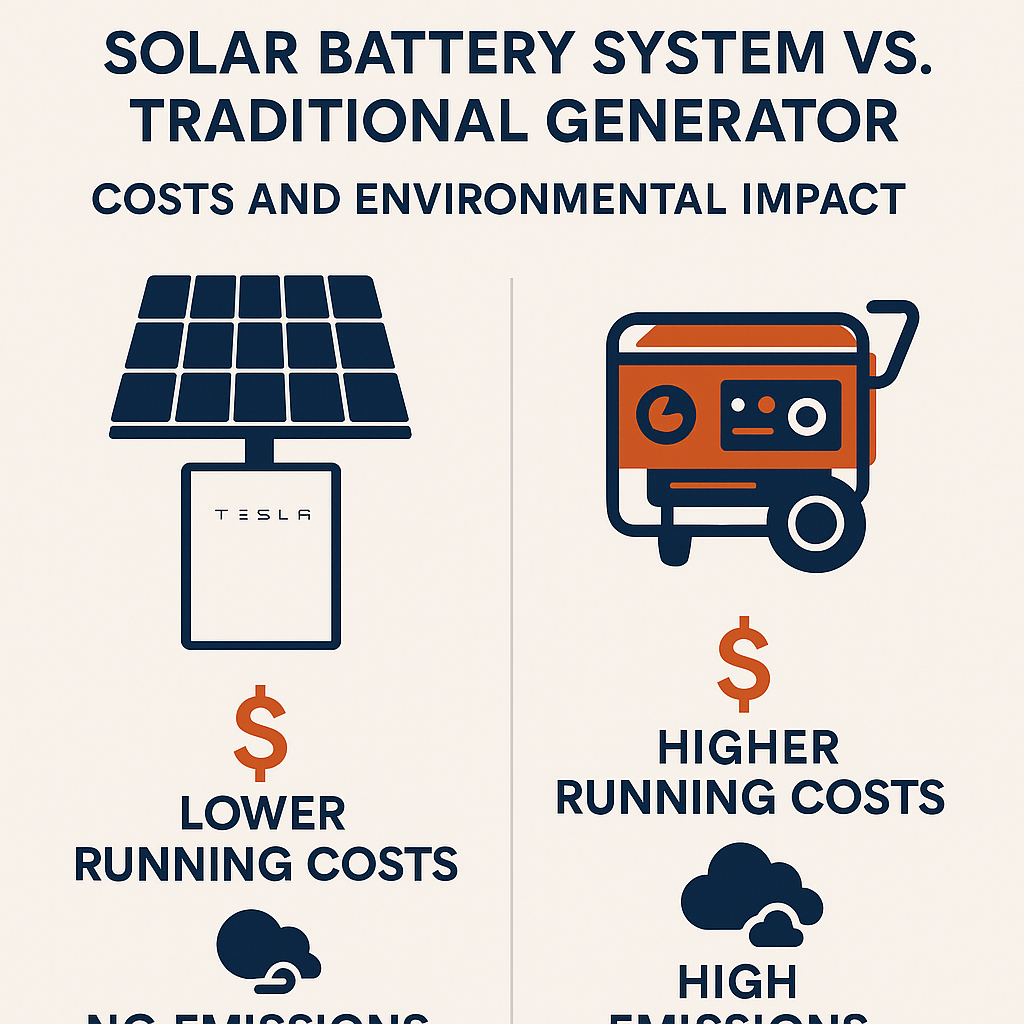
Cost Comparison (2024)
| Backup Type | Initial Cost | Annual Maintenance | Operating/Fuel Costs |
|---|---|---|---|
| Solar + Battery | $25,000 – $35,000* | $0 – $500 | $0 (sunlight is free) |
| Standby Generator | $7,000 – $15,000 | $200 – $500 | $50 – $200 per outage |
| Portable Generator | $500 – $3,000 | $50 – $150 | $30 – $100 per outage |
* Thanks to the 30% federal tax credit, solar system costs can reduce to approximately $17,500 – $24,500.
Generators have lower upfront costs but higher ongoing fuel expenses, whereas solar investments pay off long-term with minimal operating costs.
Environmental Impact
- Solar Batteries: Zero emissions during use, powered by unlimited sunlight. While lithium battery production has environmental considerations, advances in recycling are improving sustainability.
- Generators: Emit significant CO2, produce noise pollution, and carry risks of fuel leaks that harm the environment. Propane generators are cleaner but still less eco-friendly than solar.
Solar batteries produce roughly ten times fewer emissions per kWh than generators, making them the greener choice.
Safety Considerations
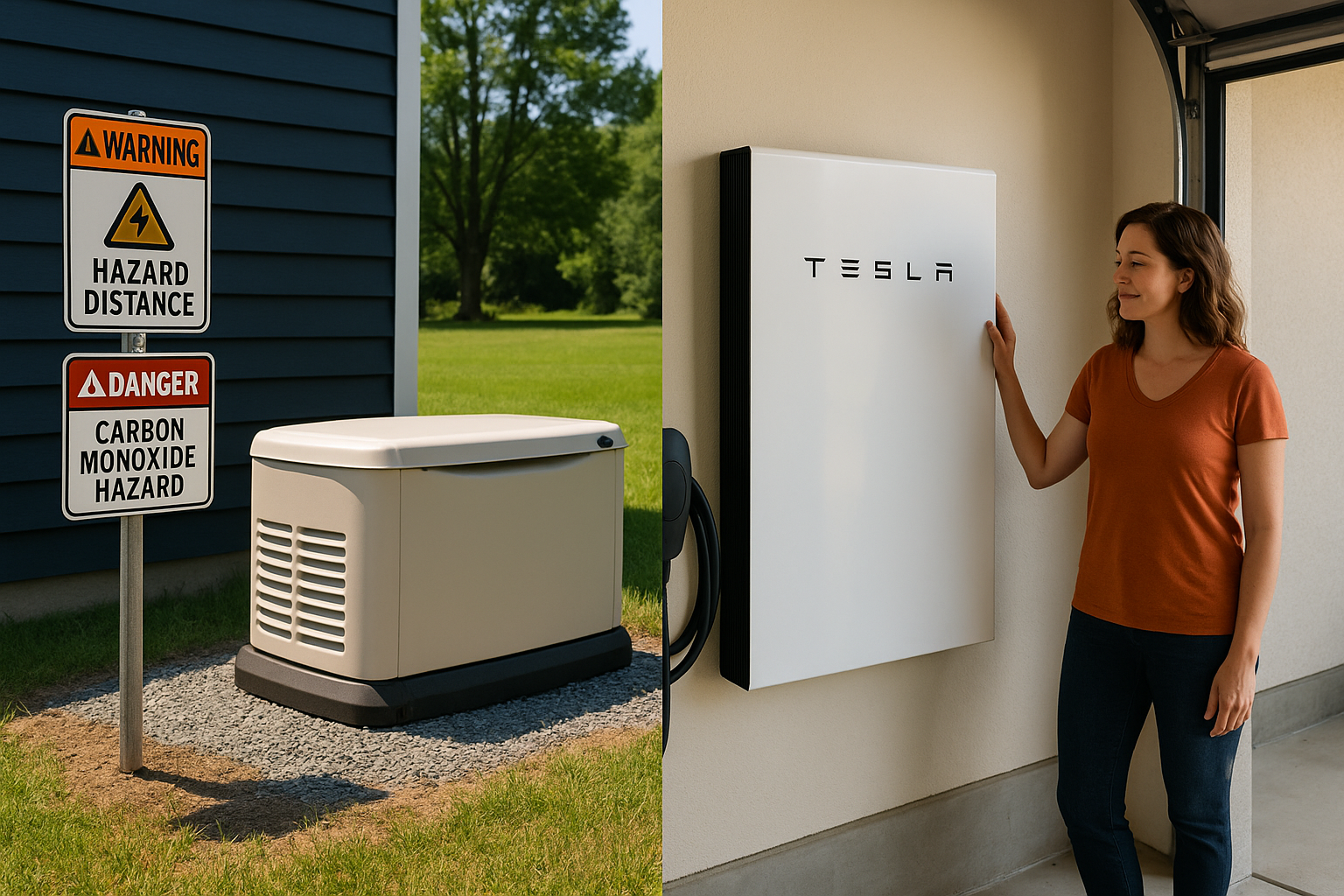
- Generators: Must be placed at least 15 feet away from structures and never operated indoors due to carbon monoxide risks.
- Solar Batteries: Silent and safe with no combustion or fuel spill hazards, equipped with advanced safety features.
Generators pose a higher fire and poisoning risk if used improperly, while solar batteries offer a safer backup power solution.
User Experiences
Solar Battery Users:
- Report uninterrupted power during outages.
- Appreciate lower carbon footprints.
- Note the initial investment but recognize long-term benefits.
Generator Users:
- Value consistent whole-home power, including AC.
- Note challenges with noise, fuel shortages during peak wildfire season, and environmental guilt.
Expert Insights
Dr. Severin Borenstein from UC Berkeley notes that solar plus storage offers financial sense for outage-prone homes, with a typical payback over 10-15 years and invaluable peace of mind.
CAL FIRE recommends strict safety for generators and prefers batteries in high-risk areas to reduce fire hazards.
Final Verdict
| Factor | Solar Battery | Generator |
|---|---|---|
| Reliability in Wildfires | Good; performance affected by smoke | Reliable with steady fuel supply |
| Power Duration | 1-3 days, scalable | Unlimited with fuel |
| Environmental Impact | Clean, renewable | Noisy, polluting |
| Cost | Higher upfront, lower operating | Lower upfront, higher ongoing |
| Safety | Low risk | Fire and CO poisoning risks |
| Noise | Silent | Loud |
If sustainability and quiet operation top your list, solar batteries are your best bet. For whole-home power with fuel availability, generators remain a strong choice.
Getting Started
- Explore DSIRE for solar incentives.
- Review CAL FIRE’s Generator Safety Tips.
- Use EnergySage Battery Calculator to determine the right battery size.
- Consult local installers experienced with wildfire backup solutions.
Being prepared for wildfire season means balancing costs, environmental impact, safety, and reliable energy so you can stay comfortable and connected no matter what. Power outages don’t have to interrupt your life — choose the backup solution that fits your needs and helps keep California safe.
Stay safe and powered up. 🔋🔥